
Opening your first position feels intimidating without structure. How to place your first Forex trade starts with preparation, not clicking buy or sell. Clear steps reduce mistakes and help you focus on execution instead of fear.
Beginners often rush entries after watching the price move. This habit leads to poor timing and unmanaged risk. A simple process keeps decisions consistent and removes emotional pressure during live trading.
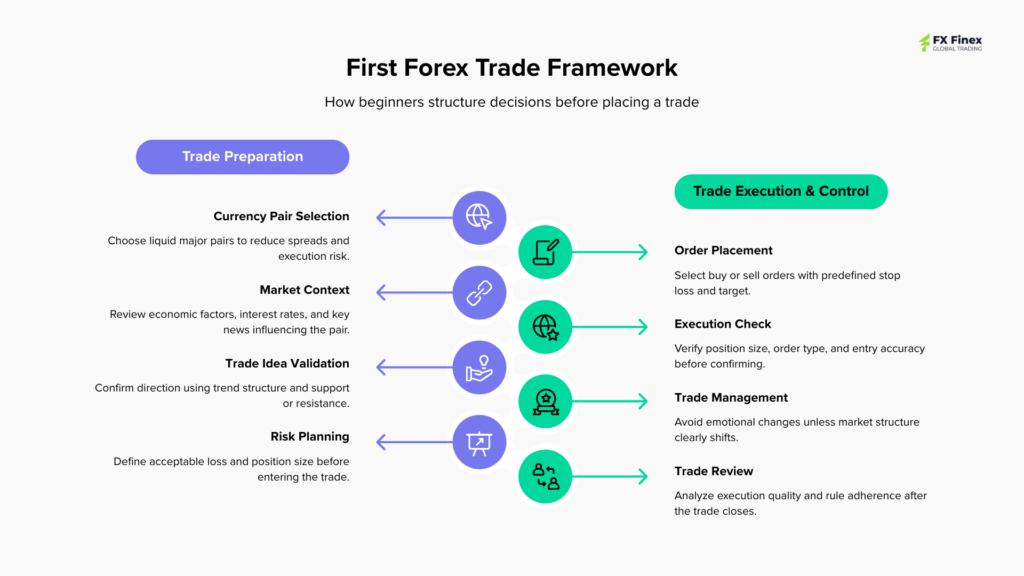
This step-by-step guide shows you exactly what to do before, during, and after your first trade!
Step One: Choose a Currency Pair
Start with a major currency pair due to higher liquidity and tighter spreads. Pairs like EUR USD or GBP USD move smoothly compared to exotic pairs. Smooth movement supports cleaner execution for beginners.
Each pair reflects economic strength between two countries. News, interest rates, and data releases influence direction. Focus on one pair to understand its behavior before expanding.
Pair selection affects volatility and cost. Choosing liquid pairs improves consistency during early learning stages.
Tip: Trade one major pair until you understand its rhythm.
Step Two: Analyze Direction
Decide whether you expect the price to rise or fall. Beginners benefit from simple tools like trend direction and recent support or resistance levels. Avoid cluttering charts with many indicators.
If price trades above recent highs, buyers control momentum. If price trades below recent lows, sellers dominate. Use a clear structure instead of prediction. Decisions from the Federal Reserve often influence USD pairs. Interest rate expectations drive medium and long-term trends.
Direction bias gives purpose to your trade. Enter with a clear reason, not guesswork.
Step Three: Define Risk and Position Size
Before entering, decide how much you risk if the trade fails. Beginners benefit from risking one percent or less per trade. This approach protects capital during learning. Position size depends on stop loss distance and account balance. You calculate size after defining risk. This process removes emotional sizing decisions.
Use these beginner risk rules before placing any order:
- Risk a fixed small percentage per trade
- Adjust size based on stop loss distance
- Avoid increasing size after losses
Following these rules protects your account and builds discipline. Consistency matters more than profit early on.
Warning: Increasing size after losses accelerates drawdowns.
Step Four: Place Stop Loss and Take Profit
A stop loss defines where you exit if price moves against you. Place it beyond recent highs or lows. Avoid placing stops randomly based on round numbers. A take profit defines your target. Beginners benefit from aiming for at least the same distance as the stop. This creates balanced risk and reward.
Stop placement guidelines help beginners stay consistent:
- Place stops beyond clear price structure
- Avoid moving stops without confirmation
- Accept small losses as normal
Clear exits reduce stress. You know risk and reward before entering the trade.
Step Five: Execute the Trade
Open your trading platform and enter order details. Choose buy if you expect price to rise. Choose sell if you expect price to fall. Double check size, stop, and target before confirming.
Market orders execute immediately. Pending orders trigger at specific prices. Beginners often prefer market orders to avoid confusion during execution. Order execution completes your plan. Avoid changing parameters after entry unless structure changes.
Alert: Entering trades without predefined exits increases emotional mistakes.
Step Six: Review After the Trade
After closing the trade, review execution quality. Focus on whether you followed the rules, not the profit outcome. This habit builds long-term improvement. Write down the entry reason, stop placement, and emotions. Reviewing trades helps identify mistakes early and reinforces good behavior.
Consistent review supports learning and confidence growth:
- Journal every trade outcome
- Track rule adherence
- Identify repeated errors
Wrapping Up
Learning how to place your first Forex trade requires structure and patience. Following clear steps for pair selection, risk control, and execution builds confidence and consistency. Strong habits formed early support long-term trading progress.