
Most beginners believe success comes from better indicators or faster entries. Trading psychology basics show why mindset and behavior influence results more than strategy choice. Emotions shape how you follow rules, manage losses, and react under pressure, especially during unpredictable market conditions.
Trading places money at risk, which naturally triggers emotional responses. Fear, frustration, and overconfidence often appear without warning. Understanding how these emotions affect decisions helps beginners avoid repeated mistakes that slowly erode capital and confidence over time.
This article explains how psychology affects trading decisions and how beginners build mental discipline step by step!
What Trading Psychology Really Means
Trading psychology refers to how emotions, beliefs, and habits influence trading decisions. Every trader experiences emotional reactions when prices move against expectations. These reactions affect execution, risk management, and rule adherence more than most technical factors.
Psychology matters because markets operate on uncertainty. No setup guarantees success. Beginners who expect certainty feel stress and disappointment when losses occur. Accepting uncertainty reduces emotional shock and supports consistent behavior across both winning and losing trades.
Note: Emotional reactions increase when expectations remain unrealistic.
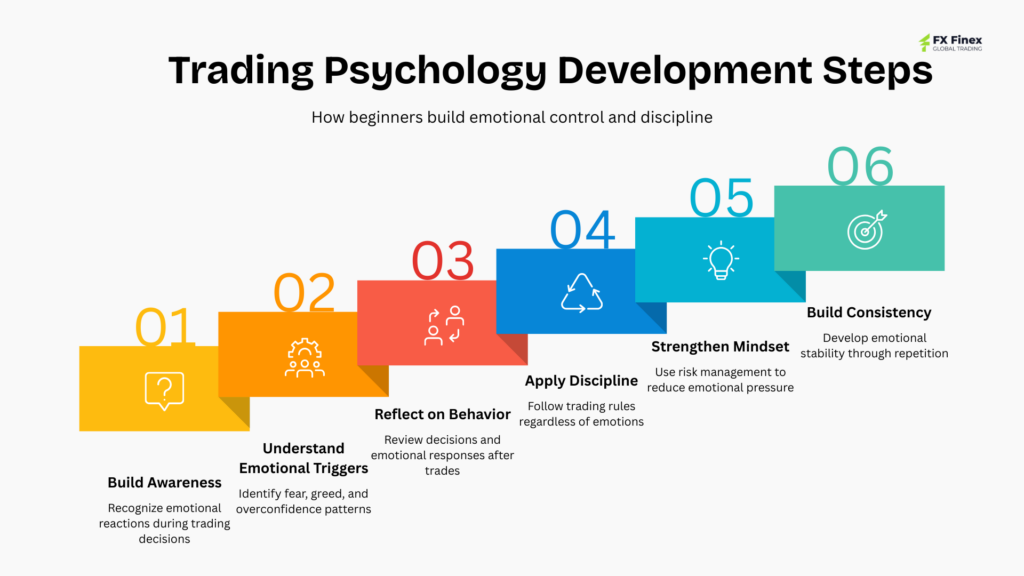
Common Emotional Traps Beginners Face
Beginners often repeat the same emotional patterns. Fear causes early exits. Greed encourages oversized positions. Frustration leads to revenge trading after losses. These behaviors appear logical in the moment but damage results over time.
Losses feel personal when identity is tied to outcomes. This mindset causes impulsive decisions and rule-breaking. Separating self-worth from trade results helps beginners maintain objectivity and discipline during difficult periods.
Common emotional traps include:
- Fear of missing out during fast moves
- Revenge trading after losses
- Overconfidence after winning streaks
Recognizing these patterns early helps beginners interrupt them before damage accumulates.
Fear and Its Impact on Decision Making
Fear appears when money feels threatened. It causes hesitation, early exits, and avoidance of valid setups. Beginners often move stops closer or close trades prematurely to escape discomfort, which distorts risk risk-reward balance.
Fear also prevents entry. Traders hesitate despite valid signals, then chase price later at worse levels. Understanding fear as a normal response helps beginners pause rather than react impulsively.
Warning: Fear-driven exits often reduce long-term profitability.
Greed and Overconfidence Explained
Greed appears after wins or during strong trends. It pushes traders to increase position size, remove stops, or enter late without confirmation. Overconfidence follows short-term success and leads to ignoring risk rules.
Beginners often mistake winning streaks for skill improvement rather than variance. This belief encourages higher exposure at the worst time. Maintaining consistent risk regardless of recent outcomes prevents emotional escalation.
Manage greed and confidence using these rules:
- Keep position size constant after wins
- Follow predefined risk limits
- Avoid increasing trade frequency
The Role of Discipline in Trading
Discipline means following rules regardless of outcome. It does not eliminate emotion. It limits the influence of emotion on behavior. Beginners build discipline through repetition, not motivation.
Clear rules simplify decisions. When rules define size, stop placement, and trade limits, fewer choices remain during live trading. This structure reduces emotional conflict and improves execution consistency.
Discipline structure matters more than willpower alone.
How Risk Management Supports Psychology
Risk management directly influences emotional stability. Smaller losses feel manageable. Large losses create stress and impulsive behavior. Beginners who control risk experience smoother emotional cycles and clearer thinking.
Fixed risk per trade removes emotional sizing decisions. Stop losses define maximum pain before entry. These tools reduce fear and prevent panic during adverse price movements.
Risk rules that support psychology include:
- Risk a fixed small percentage per trade
- Always define a stop loss
- Limit the number of open trades
Tip: Risk control stabilizes mindset and decision-making.
Trading Psychology and Market Uncertainty
Markets reflect collective behavior, not logic. Prices move unpredictably even with strong analysis. Beginners who accept uncertainty experience less frustration and fewer emotional reactions.
Expecting losses as part of trading reduces shock when they occur. This mindset shifts focus from avoiding losses to managing them. Acceptance supports patience and long-term consistency.
Alert: Expecting certainty increases emotional volatility.
Journaling as a Psychological Tool
Trading journals improve self-awareness. Writing down emotions, decisions, and rule adherence reveals patterns that charts cannot show. Beginners identify emotional triggers and repeated mistakes through consistent journaling.
Journals shift focus from profit to process. Reviewing behavior highlights improvement areas and reinforces discipline. This practice builds accountability without judgment.
An effective trading journal tracks:
- Entry and exit reasons
- Risk and position size
- Emotional state before and after trades
Note: Awareness leads to gradual improvement.
Building Psychological Resilience Over Time
Psychological strength develops through experience and reflection. Losses provide feedback when analyzed objectively. Beginners who review mistakes without self-criticism progress faster.
Resilience grows when traders follow rules consistently despite outcomes. Confidence builds from discipline rather than results. This stability allows skill development without emotional burnout.
Notice: Consistency strengthens confidence more than short-term profit.
Wrapping Up
Understanding trading psychology basics helps beginners manage emotions that influence every decision. Fear, greed, and overconfidence affect execution more than strategy selection. By combining realistic expectations, structured risk rules, and self-awareness, traders create a stable foundation for long-term development and consistent improvement.