Many new traders overlook physical markets when starting out. Commodities trading basics provide a clear introduction to assets driven by real-world supply and demand. These markets behave differently from forex or crypto and offer valuable diversification.
Commodities include raw materials used daily across global economies. Price movement reflects production levels, consumption trends, and geopolitical developments. Understanding these drivers helps beginners trade with context instead of reacting to random price changes.
This beginner’s guide explains how commodity markets work and how you approach them with structure and confidence!
What Commodities Trading Means
Commodities trading involves buying and selling raw materials such as metals, energy products, and agricultural goods. Traders speculate on price movement rather than taking physical delivery. Most retail traders access commodities through derivatives.
Unlike company shares, commodities hold no balance sheets or earnings reports. Price depends on scarcity, weather, logistics, and economic demand. These factors create trends that differ from financial markets.
Market behavior often responds to global events like supply disruptions or demand surges. Beginners benefit from understanding why prices move before attempting to trade them.
Note: Commodity prices often reflect physical shortages rather than speculation alone.
Main Types of Commodities
Commodities fall into broad categories based on usage and production. Each category responds to different economic forces. Beginners should understand these distinctions before selecting instruments.
Metals include precious assets like gold and silver, often used as value stores. Energy includes oil and natural gas, which respond to production and geopolitical factors. Agricultural products depend heavily on seasonal cycles and weather patterns.
The main commodity categories include:
- Metals such as gold, silver, and copper
- Energy products like crude oil and natural gas
- Agricultural goods, including wheat, corn, and coffee
Each category behaves differently during economic cycles. Metals often react to inflation expectations. Energy responds to supply coordination. Agriculture reacts to climate and harvest conditions.
How Supply and Demand Drive Prices
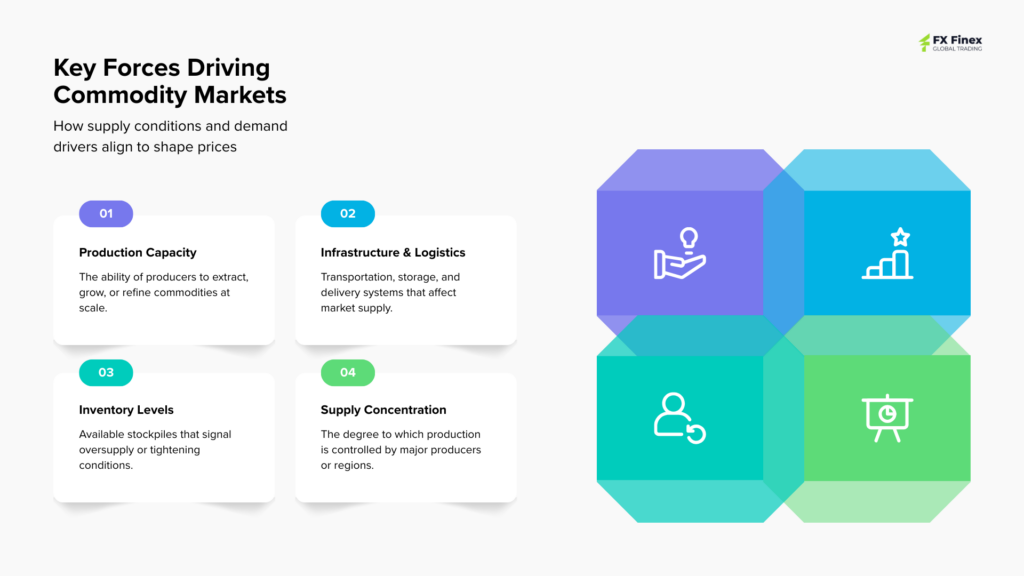
Supply and demand form the core of commodity pricing. Limited supply with strong demand pushes prices higher. Oversupply with weak demand pressures prices lower. Unlike digital assets, production constraints matter.
Oil markets provide a clear example. Production decisions by OPEC influence global supply levels. Changes in output targets often lead to strong directional moves. Price drivers remain tangible and measurable. This clarity helps beginners connect market movement to real-world events rather than abstract sentiment.
Trading Commodities Through Derivatives
Most retail traders use derivatives rather than physical contracts. Common instruments include futures, CFDs, and ETFs. These products track underlying commodity prices without ownership of physical goods.
CFDs allow smaller position sizes and flexible leverage. Futures contracts involve expiration dates and standardized sizes. ETFs track baskets of commodities or individual products.
Understanding contract structure helps avoid confusion around rollover dates and pricing differences. Beginners benefit from simple instruments with clear cost structures.
The table below compares common commodity trading instruments:
| Instrument | Complexity | Beginner Suitability |
| CFDs | Lower | Higher |
| Futures | Higher | Lower |
| ETFs | Medium | Higher |
Choosing the right instrument improves execution and reduces unexpected costs.
Volatility Characteristics in Commodity Markets
Commodity volatility varies widely by product. Energy markets often experience sharp moves due to geopolitical risk. Agricultural markets spike during weather events. Metals often trend slowly but persistently.
Beginners should expect sudden price shifts during supply news. These moves differ from forex patterns and require patience. Overtrading volatile commodities often leads to losses. Volatility awareness helps adjust position size and expectations. Calm execution supports consistency.
Warning: Commodity news events often cause sharp gaps and slippage.
Position Sizing for Commodity Trades
Position sizing protects capital during unpredictable moves. Beginners benefit from risking a small fixed percentage per trade. Commodities often require wider stops due to volatility.
Smaller position sizes reduce emotional stress. They also allow traders to stay active during drawdowns. Discipline matters more than prediction accuracy.
Position sizing rules support beginner stability:
- Risk is one percent or less per trade
- Reduce size during high volatility periods
- Avoid increasing size after losses
These rules prevent large equity swings. Consistency improves confidence over time.
Timing and Seasonal Effects
Many commodities follow seasonal patterns. Agricultural products often move around planting and harvest cycles. Energy demand changes with weather and economic activity.
Seasonality does not guarantee direction. It provides context. Beginners use it as background information rather than a trading signal. Understanding timing improves patience. You wait for alignment between price structure and broader conditions instead of forcing trades.
Seasonal awareness adds depth to analysis without complexity.
Risk Management for Beginners
Risk management defines survival in commodity trading. Beginners benefit from clear rules around stops, exposure, and trade frequency. Commodities reward patience and discipline.
Always define a stop loss before entering. Place stops beyond logical structure. Accept losses as part of learning.
Simple risk rules for commodity beginners include:
- Limit the number of open positions
- Avoid correlated commodity exposure
- Stop trading after reaching daily loss limits
These limits reduce emotional decision-making. Structure replaces impulse.
Alert: Trading commodities without stops exposes accounts to rapid drawdowns.
Wrapping Up
Learning commodities trading basics helps beginners understand markets driven by real world forces. Supply, demand, and seasonality shape price movement differently from financial assets. Structured risk control and patience support steady progress and long-term development.