
Entering the currency market without a foundation creates confusion and frustration. Forex trading basics give you the language and structure needed to understand price movement, quotes, and market behavior. Strong fundamentals reduce mistakes during your early learning phase.
Many beginners rush into trades without understanding how currencies interact. This leads to poor timing and weak decision-making. Learning how the forex market works builds confidence and supports disciplined execution from the start.
This article explains the core concepts you need before placing your first forex trade!
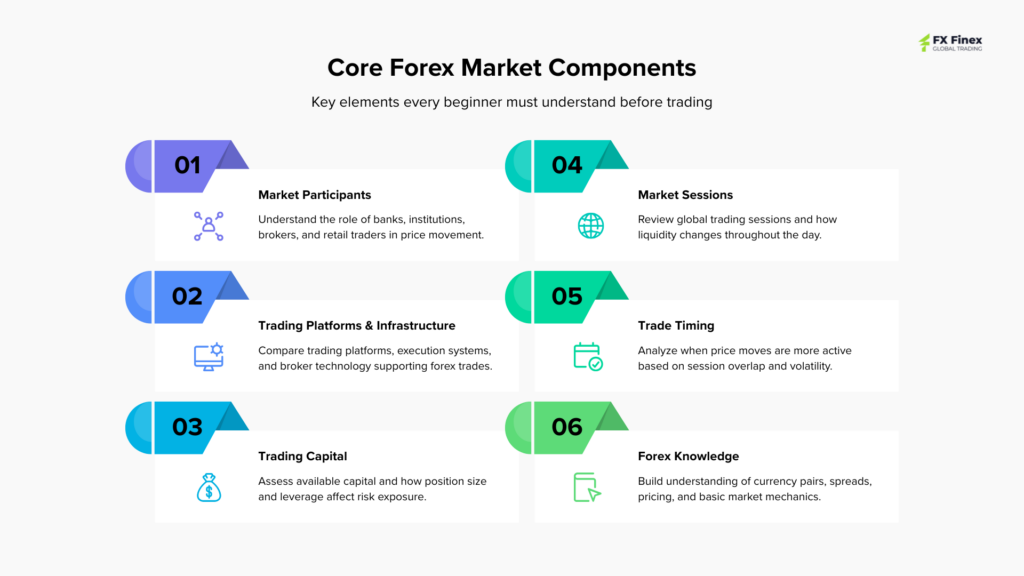
What the Forex Market Is
The forex market is a global marketplace where currencies trade in pairs. When you trade forex, you exchange one currency for another based on expected price movement. Prices reflect economic strength, interest rates, and market sentiment.
Forex operates twenty-four hours per day from Monday to Friday. Trading follows global financial centers, which creates overlapping sessions with varying volatility and liquidity levels. Market structure differs from stock exchanges. There is no central exchange. Trading occurs electronically through banks, brokers, and institutions worldwide.
Note: Higher liquidity sessions often offer tighter spreads and smoother execution.
Understanding Currency Pairs
Currencies trade in pairs because one currency always measures against another. The first currency is the base. The second is the quote. Price shows how much quote currency you need to buy one unit of the base.
Pairs fall into three main categories based on liquidity and popularity. Beginners benefit from focusing on the most liquid pairs early.
The main currency pair categories include:
- Major pairs with high liquidity and lower spreads
- Minor pairs without the US dollar
- Exotic pairs with higher volatility and wider spreads
Starting with major pairs helps beginners manage costs and volatility. These pairs react more predictably to economic data and global news.
Tip: Focus on one or two major pairs until consistency develops.
How Forex Prices Move
Forex prices move based on supply and demand. When buyers dominate, prices rise. When sellers dominate, prices fall. Economic releases, interest rates, and political events influence this balance.
Decisions from the Federal Reserve and the European Central Bank strongly affect currency strength. Interest rate expectations often drive long-term trends across major pairs.
Price movement reflects collective market expectations, not certainty. Learning to read price behavior builds context before applying indicators or strategies.
Forex Trading Sessions Explained
Trading activity changes throughout the day based on global sessions. Each session has unique characteristics related to volume and volatility. Understanding sessions helps you choose suitable trading times.
The table below outlines the main forex trading sessions:
| Session | Key Markets | Typical Volatility |
| Asian | Tokyo, Sydney | Lower |
| London | London | High |
| New York | New York | High |
Session overlap often creates the strongest price moves. Many beginners prefer London and New York hours due to higher liquidity and clearer trends.
Alert: Trading low liquidity sessions increases slippage and spread costs.
Bid, Ask, and Spread Basics
Forex quotes include two prices. The bid shows where you sell. The ask shows where you buy. The difference between them is the spread, which represents trading cost.
Lower spreads reduce entry friction and improve trade efficiency. Major pairs usually offer tighter spreads due to higher liquidity. Beginners benefit from avoiding pairs with wide spreads. Trading costs affect results over time. Understanding spreads helps you evaluate broker conditions and execution quality.
Wrapping Up
Learning Forex trading basics builds clarity and confidence before risking real money. Understanding pairs, pricing, and sessions helps beginners avoid confusion and costly mistakes. A strong foundation supports steady progress and disciplined growth.