New traders often enter the market without considering when they trade. Forex trading sessions define how liquidity, volatility, and price behavior change throughout the day. Understanding session structure helps beginners avoid slow periods, reduce frustration, and align trading activity with clearer price movement.
The forex market operates globally, yet activity is not evenly distributed. Price behavior changes as financial centers open and close. Learning how sessions work allows beginners to trade with intention instead of guessing why markets feel active at one time and stagnant at another.
This guide explains forex trading sessions clearly so beginners understand when markets move and how to trade with structure!
What Forex Trading Sessions Really Are
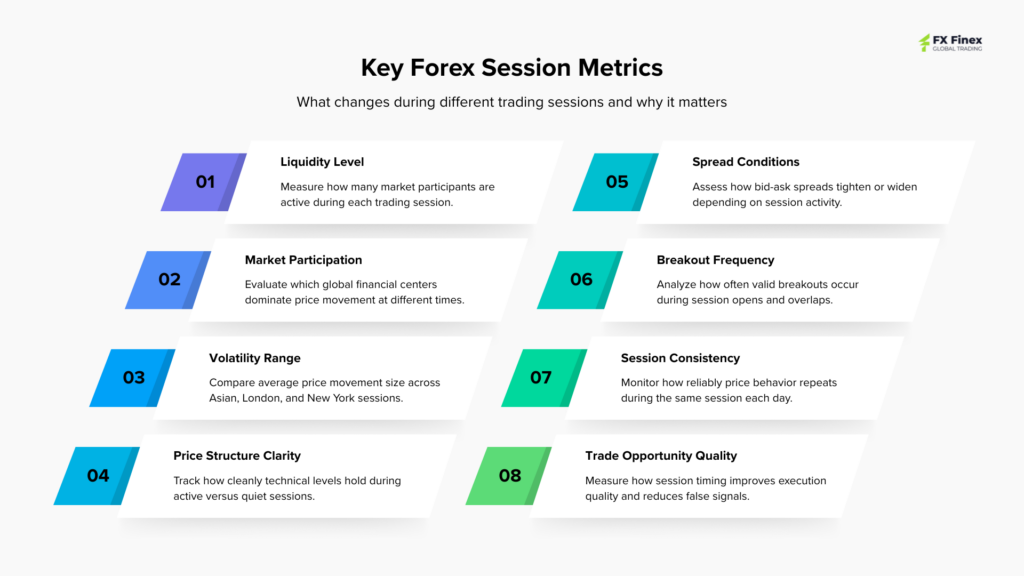
Forex trading sessions represent the business hours of major financial centers around the world. As banks and institutions open, trading volume increases in their region. When they close, activity declines. These shifts directly affect liquidity, spreads, and volatility.
Although forex trades twenty-four hours per day from Monday to Friday, price behavior changes significantly depending on which session dominates. Beginners who ignore this often trade during quiet periods and misinterpret slow movement as failed analysis.
The Three Major Forex Sessions
The global forex market revolves around three primary sessions. Each session reflects regional participation and economic influence. Understanding these sessions helps beginners anticipate volatility and choose suitable trading times.
The Asian session reflects activity from Tokyo and surrounding markets. The London session represents European financial centers. The New York session reflects North American participation and economic data.
The three major forex sessions include:
- Asian session dominated by Tokyo
- London session representing Europe
- New York session representing North America
Each session behaves differently. Recognizing these differences improves timing and expectation management.
Characteristics of the Asian Session
The Asian session typically shows lower volatility compared to others. Price often moves within tighter ranges, especially for pairs not involving Asian currencies. This environment suits range trading but frustrates breakout-focused beginners.
Currency pairs involving JPY and AUD often show more activity during this session. Beginners who prefer calmer conditions may find this session easier to manage emotionally, though patience remains essential. Understanding session behavior prevents unrealistic expectations about price movement.
Characteristics of the London Session
The London session introduces the highest liquidity of the trading day. European banks, institutions, and funds become active, creating strong directional movement. Many major trends begin during this session.
London hours suit beginners seeking clearer momentum and structure. Spreads tighten, execution improves, and technical levels are respected more consistently. This session often defines the tone for the rest of the trading day.
Characteristics of the New York Session
The New York session overlaps with London for several hours, creating peak volatility. Economic data releases from the United States often occur during this time, increasing movement across USD pairs.
After London closes, volatility often declines. Beginners should be aware of this shift to avoid forcing trades during slower late-session conditions.
Session Overlaps and Market Volatility
Session overlaps occur when two major financial centers operate simultaneously. These periods usually show the highest liquidity and strongest price movement. The London and New York overlap remains the most active period in forex trading.
Beginners often benefit from trading overlaps because price behavior becomes clearer. Strong moves, breakouts, and trend continuation occur more frequently during these hours.
The most active overlap period includes:
- London and New York sessions overlap
Trading during overlaps improves execution quality and reduces false signals.
Choosing the Best Session as a Beginner
Choosing the right session depends on availability, personality, and strategy. Beginners who trade part time should avoid forcing trades outside suitable hours. Aligning trading time with session activity improves consistency.
Those seeking calmer markets may prefer Asian hours. Those seeking momentum often choose London or New York. Matching session behavior with personal preference reduces emotional mistakes.
Tip: Trade when markets align with your strategy, not your schedule alone.
How Sessions Affect Currency Pairs
Currency pairs respond differently depending on the session. EUR and GBP pairs often move the most during London. USD pairs react strongly during New York, especially around economic releases. JPY pairs often show activity during Asian hours.
Understanding these relationships helps beginners choose appropriate instruments for each session. This avoids trading inactive pairs during unsuitable hours.
Examples of session-influenced pairs include:
- EUR pairs during London hours
- USD pairs during New York hours
- JPY pairs during Asian hours
Risk Management Across Sessions
Risk varies by session. Volatile overlaps require smaller position sizes. Quiet sessions require patience and wider expectations. Beginners often use the same risk approach across all sessions, which creates an imbalance.
Adjusting risk to session conditions supports consistency. Wider stops may be needed during high volatility. Tighter ranges require reduced expectations rather than increased size.
Common Beginner Mistakes With Forex Sessions
Many beginners trade at random hours without understanding session behavior. Others trade during low liquidity periods and blame strategies when the price does not move. Another common mistake involves trading every session instead of focusing on one.
Consistency improves when beginners specialize. Trading one main session builds familiarity with behavior, volatility, and rhythm.
Warning: Trading during inactive sessions increases frustration and overtrading.
Practicing Session Awareness
Session awareness improves through observation. Beginners should mark session times on charts and note how the price behaves during each period. Over time, patterns become obvious.
Journaling session performance helps identify strengths and weaknesses. You may notice better results during specific hours. This feedback supports refinement without complexity.
Wrapping Up
Understanding Forex trading sessions helps beginners trade when markets offer the best conditions. Session structure explains why volatility changes throughout the day and how price behavior shifts with global participation. By aligning trading time, currency pairs, and risk with session characteristics, beginners create a structured approach that supports clearer decisions and steadier progress.