
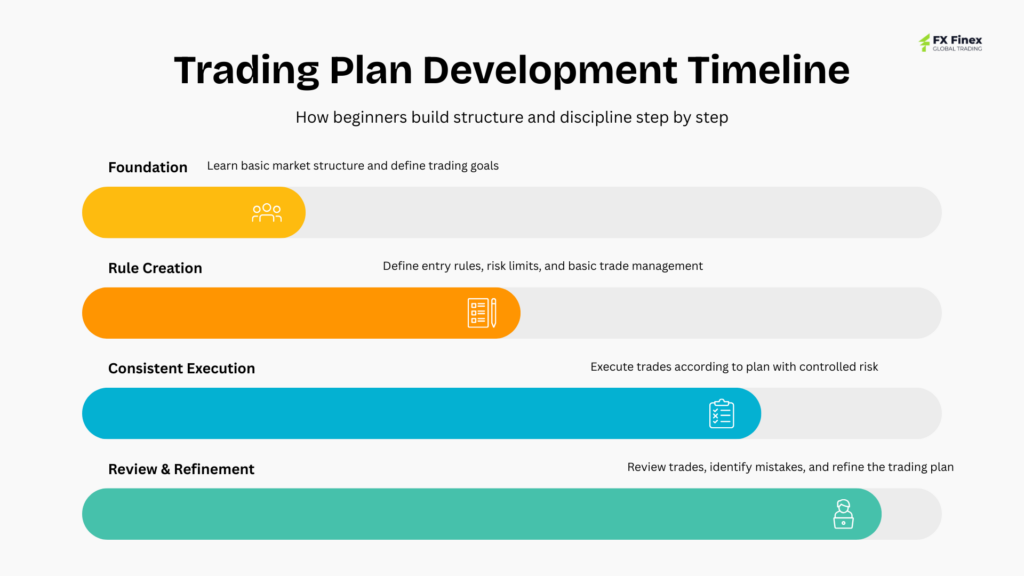
Many beginners enter markets without structure and rely on impulse. A trading plan for beginners provides clear direction by defining what you trade, how you trade, and how you manage risk. This structure reduces emotional decisions and replaces guesswork with repeatable actions during live market conditions.
Trading without a plan often leads to inconsistent results and frustration. A written plan acts as a decision filter. It keeps you focused on process instead of outcomes and supports steady skill development as experience grows over time.
This guide explains how beginners build a simple, effective trading plan step by step!
What a Trading Plan Really Is
A trading plan is a written set of rules that guides every trading decision. It defines markets, setups, risk limits, and execution behavior. The goal is consistency, not perfection. A plan removes uncertainty by answering questions before trades begin.
Beginners often confuse a trading plan with a strategy alone. A plan covers much more. It includes preparation, execution rules, and review processes that shape behavior across winning and losing trades. Structured decision making separates planned trading from impulsive trading.
Why Beginners Need a Trading Plan Early
Without a plan, beginners react to price movement and emotions. This leads to overtrading, inconsistent sizing, and frequent rule changes. A trading plan creates stability and limits emotional influence during volatile conditions.
Early structure accelerates learning. Mistakes become measurable instead of random. Beginners identify what works and what fails because rules remain consistent across different market environments.
A plan also reduces stress. Decisions follow predefined criteria rather than momentary feelings or external noise.
Defining Your Trading Goals
Trading goals clarify purpose and expectations. Beginners often focus only on profit, which increases pressure. Process-focused goals support learning and discipline during the early stages.
Goals should relate to behavior, not money alone. Examples include following risk rules or limiting trades per session. These goals remain achievable regardless of market outcome.
Clear beginner trading goals often include:
- Following predefined risk rules
- Executing only planned setups
- Reviewing trades consistently
Goals guide improvement and support accountability during learning.
Choosing Markets and Timeframes
A trading plan defines what markets you trade and when. Beginners benefit from limiting choices to avoid overload. Focusing on one or two instruments builds familiarity with price behavior.
Timeframe selection affects stress and decision speed. Higher timeframes offer a slower pace and fewer signals. Lower timeframes demand faster decisions and stronger emotional control.
Choosing markets and timeframes early creates routine. Routine supports discipline and reduces impulsive experimentation.
Market focus improves clarity and execution quality.
Defining Entry Criteria
Entry rules explain when you open trades. These rules rely on observable conditions such as trend direction, support, and resistance, or specific patterns. Clear criteria prevent random entries. Beginners should avoid complex signals. Simple, repeatable conditions work better during early learning. Entry rules should remain the same across trades to allow meaningful review.
A plan without entry rules lacks structure. Defined criteria turn analysis into action.
Risk Management Rules
Risk management defines how much you lose when trades fail. Beginners benefit from risking a small fixed percentage per trade. This approach limits drawdowns and emotional stress. Risk rules include position sizing, stop loss placement, and maximum daily loss limits. These rules protect capital and allow learning to continue after losses.
Important beginner risk rules include:
- Risk a fixed small percentage per trade
- Always define a stop loss
- Limit the number of open trades
Risk control supports consistency and emotional stability.
Trade Management Guidelines
Trade management rules define what you do after entry. These rules cover stop adjustments, partial exits, or holding trades until predefined targets. Clear rules prevent emotional interference. Beginners benefit from minimal management.
Over-managing trades often leads to premature exits and inconsistent results. Simple management rules reduce decision fatigue. Trade management aligns execution with plan expectations rather than momentary emotions. Execution discipline improves when actions remain predefined.
Writing Your Trading Plan
A trading plan works only when written. Writing clarifies thinking and exposes gaps. A document forces decisions that mental plans avoid. Plans do not need complexity. One or two pages often suffice. Clarity matters more than length. Beginners update plans gradually as experience grows.
The table below outlines core trading plan components:
| Plan Section | Purpose | Benefit |
| Markets and timeframe | Focus | Consistency |
| Entry rules | Structure | Repeatability |
| Risk management | Protection | Longevity |
| Review process | Improvement | Growth |
Writing your plan transforms intention into commitment.
Reviewing and Updating the Plan
A trading plan evolves through review, not impulse. Beginners should review trades regularly and check rule adherence rather than profits alone. This approach identifies weaknesses without emotional bias.
Updates should follow evidence, not frustration. Changing rules after losses creates instability. Planned reviews support steady improvement and confidence. Review builds trust in the process and highlights progress over time.
Common Beginner Mistakes With Trading Plans
Many beginners create plans but fail to follow them. Skipping rules during live trading removes the plan’s value. Others change plans too often, preventing learning.
Another mistake involves over-complexity. Too many rules cause confusion. Simplicity improves adherence and review quality. Consistency matters more than sophistication during early development.
How a Trading Plan Supports Discipline
A trading plan reduces decision-making during stress. When rules exist, you follow them instead of debating options. This structure limits emotional reactions during fast market movement.
Discipline grows through repetition. Each trade executed according to plan strengthens habit formation. Confidence builds from rule adherence rather than outcome. A plan supports discipline through clarity and repetition.
Long-Term Benefits of Planning
Over time, a trading plan becomes a performance record. You see patterns, strengths, and weaknesses clearly. This visibility supports refinement and growth.
Beginners who plan early avoid large setbacks later. Structure creates stability during market changes and personal learning curves. Planning supports sustainable development across all trading styles.
Wrapping Up
A trading plan for beginners creates structure, discipline, and consistency during early market participation. Clear goals, defined rules, and controlled risk replace emotional decisions with repeatable behavior. By writing, following, and reviewing a plan, beginners build a foundation that supports long-term progress and steady improvement.